When you click the link, it will take you to the corresponding page.
昼会席 みやした
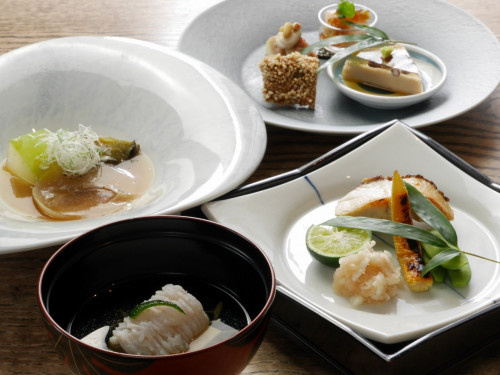
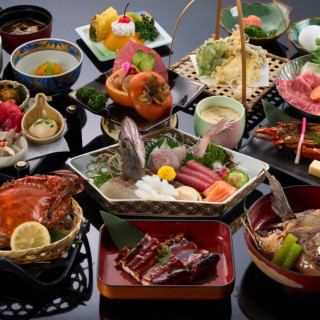
Kaiseki, originally called chakaiseki-ryōri (茶懐石料理), refers to the simple meal served during a tea gathering (chaji). The term “kaiseki” comes from Zen Buddhism. Monks, who could only eat once a day, would hold a warmed stone (kaiseki literally means “stone placed in one’s bosom”) against their stomachs on cold nights to ease hunger. The word breaks down as “kai (懐)” meaning “bosom” or “to hold close,” and “seki (石)” meaning “stone.” By holding this warm stone against their body, the monks alleviated hunger and cold. When tea ceremony culture (chanoyu) adopted Zen ideas, the modest meal served at a tea gathering—just enough to ease hunger like the warming stone—came to be called kaiseki. Initially, the meal consisted of one soup and three side dishes (ichijū sansai, 一汁三菜) made with seasonal ingredients. From the Edo period onward, tea culture spread to samurai and cultural circles, and restaurants began serving kaiseki even outside tea gatherings. At that point, the format evolved into what we know today: three side dishes—otsukuri (刺身, sashimi), nimono (煮物, simmered dishes), and yakimono (焼物, grilled dishes)—along with rice and soup. Today, kaiseki is recognized as a quintessential Japanese multi-course cuisine, independent of tea ceremony.
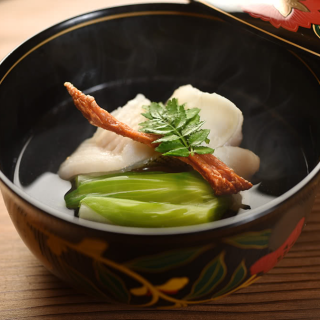
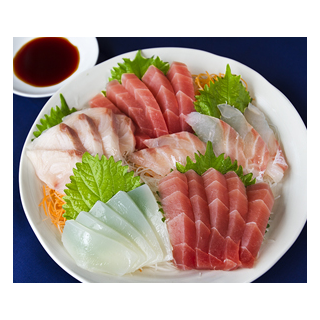
The お椀 mainly refers to the lacquered wooden bowl, primarily to the second course in the kaiseki set meal, and it is a light soup dish that highlights the original taste of the material. There is a saying in Japanese cuisine that "Owan and Sashimi are flowers of the cuisine," which means that the chef's strength can be seen in the Owan(which means broth) and sashimi. In kaiseki cuisine, the word お造り is used more often than 刺身(Sashimi).